
News & Events
REVIEWS
“A Review of Te Ladaumus” by Adam Edward Carnehl, author of The Artist as Divine Symbol: Chesterton’s Theological Aesthetic. April 4, 2026.
“Truly, man himself is crafted to imitate, to frame, and to enjoy his Creator’s splendid works. The Lord speaks beautifully, and we learn to speak poetically in return. He writes the littlest song of the bluebird and the cosmic music of the revolving galaxies, and so we make music in return. Our Father crafts the mountain ranges and the molecule, and so we draw, paint, and sculpt in return. Chesterton wrote in The Everlasting Man, ‘Art is the signature of man.’ This is because man is made in God’s image, in the image of the Creator. We make art because God made us.
“If Te Laudamus is anything in addition to being a valuable resource for God’s worshiping people, it is also a work of art. It marshals poetry, music, and art together in the old way; that is, in the natural, creaturely way Christians used to lovingly craft liturgical and theological works in the Medieval and Renaissance Church.”
Read the entire review here.
David’s Harp | “A Review of Te Laudamus” by Emily Lee. January 22, 2026.
“Te Laudamus is a masterpiece of a resource for understanding and executing historic Lutheran chanting, hymnody, and liturgy. While many of the texts and musical settings might prove challenging or feel foreign to most of us in the LCMS, its editors clearly took great care in presenting its content in a way that encourages a deeper love for and understanding of some of Lutheranism’s greatest treasures by way of poetry and musicianship, all of which nevertheless prove accessible to the skilled theologian or musician.
“For this reason, TL is for every Christian. Laity can be confident it will offer immense devotional enrichment. But this hymnal will also prove useful for pastors and church musicians who desire to complement the service with elements of historic Lutheran hymnody and liturgy.”
Read the entire review here.
PRESS & INTERVIEWS
As press and interviews related to Te Laudamus become available, they will be added here.
EVENTS
The Twenty-Seventh Annual
St. Michael Liturgical Conference
September 28, 2026
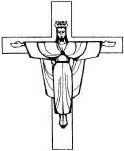
Reading the Holy Scriptures Sacramentally
Zion Evangelical-Lutheran Church
4305 Military Street, Detroit, MI 48210
The Rev. Dr. Geoffrey Boyle will present at the September 28 conference, Reading the Holy Scriptures Sacramentally, at Zion Evangelical-Lutheran Church. The Rev. Dr. Daniel Reuning will present and explore sections of the recently published Protes’tant hymnal, Te Laudamus, as part of the Conference’s workshop offerings beginning at 3:00p.
Registration and information forms for the 27th conference are available through Zion Evangelical-Lutheran Church. Contact the Church office for more information.
313.894.7450 ◆ www.ziondetroit.org ◆ church@ziondetroit.org
SCHEDULE
The conference schedule is outlined below.
To download a PDF of the schedule for use offline, please click here.
MONDAY | SEPTEMBER 28, 2026
LOCATION: GYMNASIUM
8:15a | Registration
LOCATION: CHURCH
9:00a | Holy Communion
10:45a | Keynote Address
“Reading the Holy Scriptures Sacramentally”
Rev. Dr. Geoffrey Boyle
LOCATION: CHURCH
12:00p | Sext
LOCATION: GYMNASIUM
12:15p | LUNCHEON
Greeting
The Rt. Rev. Jeffrey Miskus
English District Bishop and President
Greeting
The Rev. Dr. Jamison Hardy
President, Concordia University System
1:15p | Q & A with Dr. Boyle
LOCATION: GYMNASIUM
1:45p | Panel Discussion
2:15p | BREAK
LOCATION: CHURCH
2:30p | Organ Recital
Dr. Emily Solomon
Cantor, Zion Evangelical-Lutheran Church
LOCATION: GYMNASIUM
3:00p | Workshops
I. Te Laudamus, a Protes’tant hymnal
(The Reverend Dr. Daniel Reuning)
II. “Historic Collects of the Lutheran Church”
(The Reverend Stefan Gramenz & the Reverend Evan Scamman)
III. “The Lord’s Prayer in the Rite of the Mass”
(The Reverend Doctor Burnell Eckardt)
LOCATION: CHURCH
4:45p | Solemn Vespers
LOCATION: UNDERCROFT
till 7:00p | Gemütlichkeit
❦
Te Laudamus Celebration
June 26–27, 2026

Join the celebration of Te Laudamus’ creation and publication at
Historic Trinity Lutheran Church
1046 N 9th Street, Milwaukee, WI 53233
Please email celebration@telaudamus.org with any questions you may have about the celebration.
-
Parking options
There are a few parking options to choose from for the Te Laudamus Celebration:
Parking in Trinity’s lot will be free for the duration of the celebration. The lot is directly East of the church and is the easiest access point for entering and exiting the building. Please be mindful that Trinity is in the heart of downtown Milwaukee, and the lot is not secure. You are advised to safeguard any valuables that are left in your vehicle during the event.
Street parking is also available and will be free for the majority of the celebration. Street parking is limited. Please pay attention to signage and meters for this option.
There is a pay-to-park garage (called MATC Parking Structure) directly south of Trinity’s surface lot on 8th Street.
-
How can people enter the building?
The only doors that will be accessible during the celebration are the double doors on the East side of the building (rear of the church). These doors are adjacent to Trinity’s parking lot.
-
Handicap building access & accommodations
Trinity is handicapped accessible and has an elevator that accesses each level of the building.
-
Are children allowed to attend the celebration?
Yes! If young children need a break from the services or presentations they are welcome to visit the nursery which is located in Trinity’s undercroft. There is also a changing table and rocking chair in the nursery.
Additionally, there is a nursing mother’s room on the main floor of the building, next to the Men’s restroom.
-
Can I attend the celebration if I don’t complete the registration form?
We are requesting that everyone who plans to attend completes the form. This ensures we have an accurate count for the meals, and seats that are available.
EVENT REGISTRATION
For questions about the Te Laudamus Celebration on June 26 and 27th please email celebration@telaudamus.org.
SCHEDULE
Please bear in mind the schedule and speakers listed below may change based upon availability of some of the requested speakers.
TE LAUDAMUS CELEBRATION SPEAKERS
Speaker biographies are included with presentation descriptions below.
FRIDAY | JUNE 26, 2026
LOCATION: SANCTUARY
2:30p |Choir Rehearsal for the 3 Te Laudamus Services: Vespers, Matins, and Willan Liturgy
LOCATION: VESTIBULE
5:00p |Registration
LOCATION: SANCTUARY
5:30p |Pre-Service Music — Trinity’s organist, Mrs. Trudy Schmaltz
Rite of Dedication
Officiant — Rev. Dr. Daniel Reuning
5:45p | Te Laudamus Office of Vespers
Lector/Preacher — Rev. Jesse Krusemark
LOCATION: UNDERCROFT
6:45p | Reception
7:00p | Banquet
Master of Ceremonies — Dr. Carl Springer
Greetings from Conference and Prayer — Rev. Timothy Chang
8:00p | Program
Tribute to Chief Editor Rev. Joel Hensel — Rev. Dr. Daniel Reuning
Hymn with recorded Introduction improvised by Rev. Joel Hensel
-
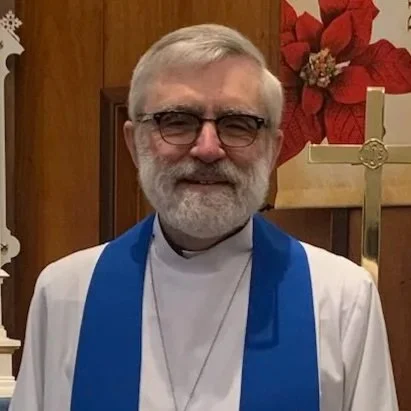
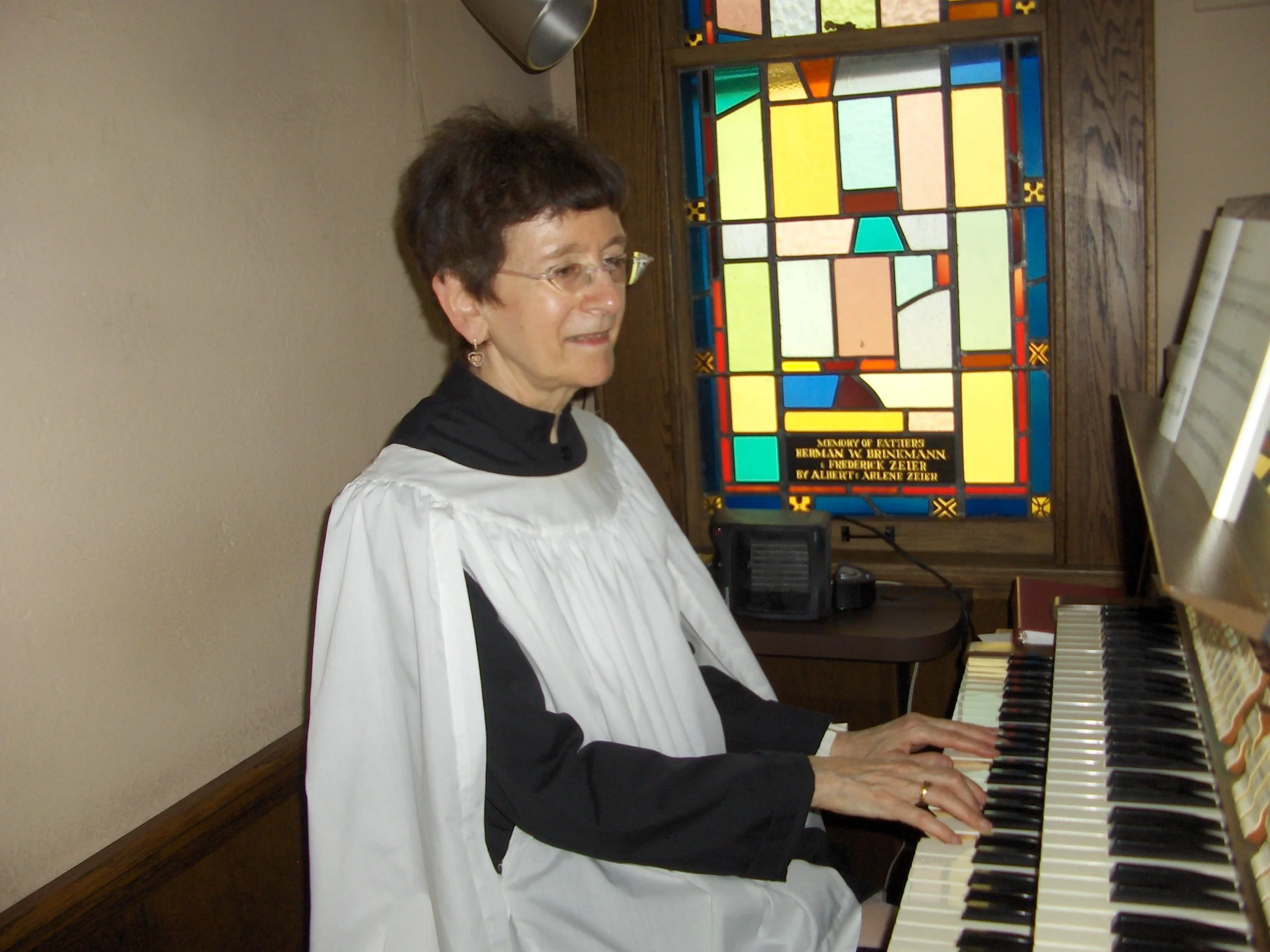
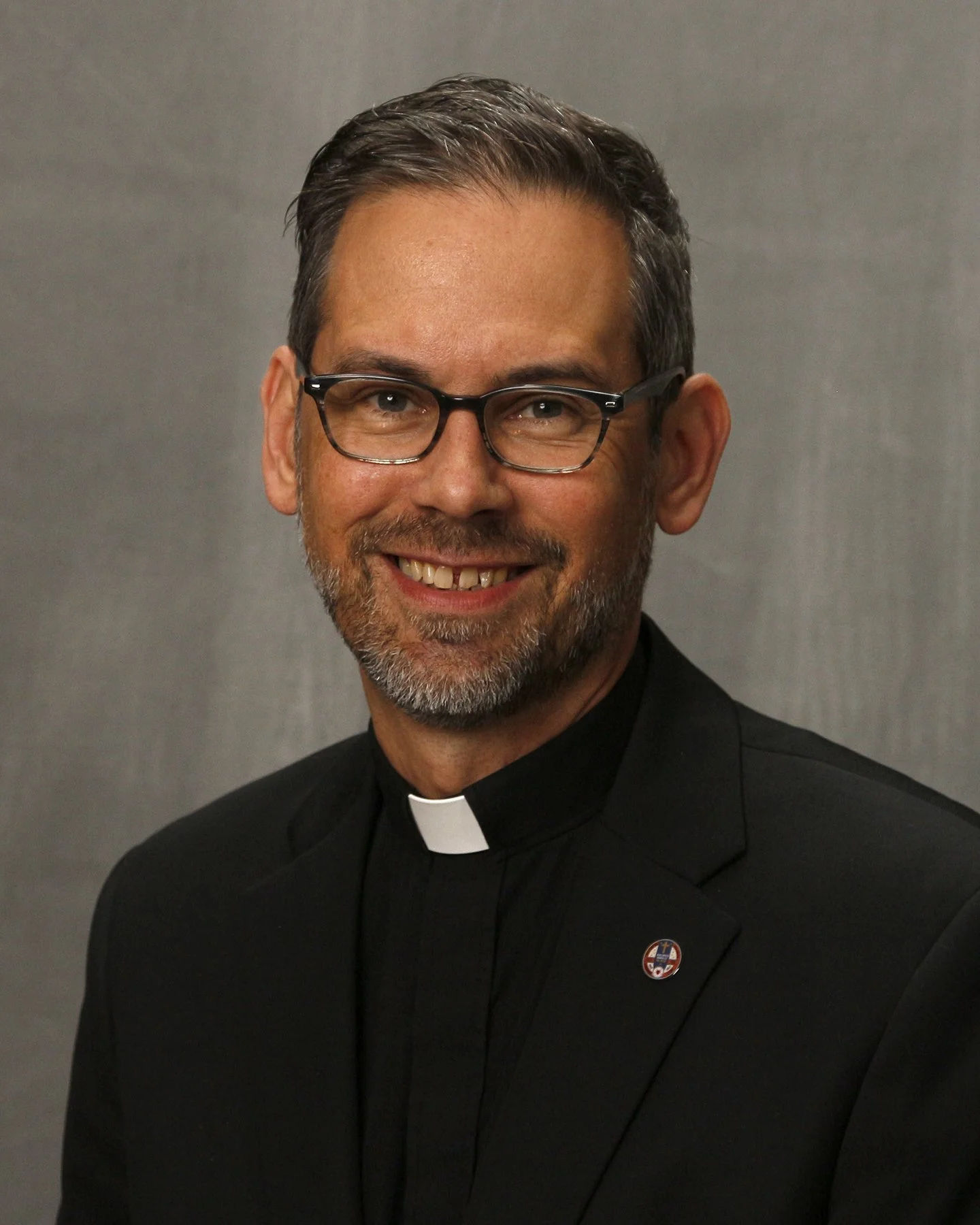
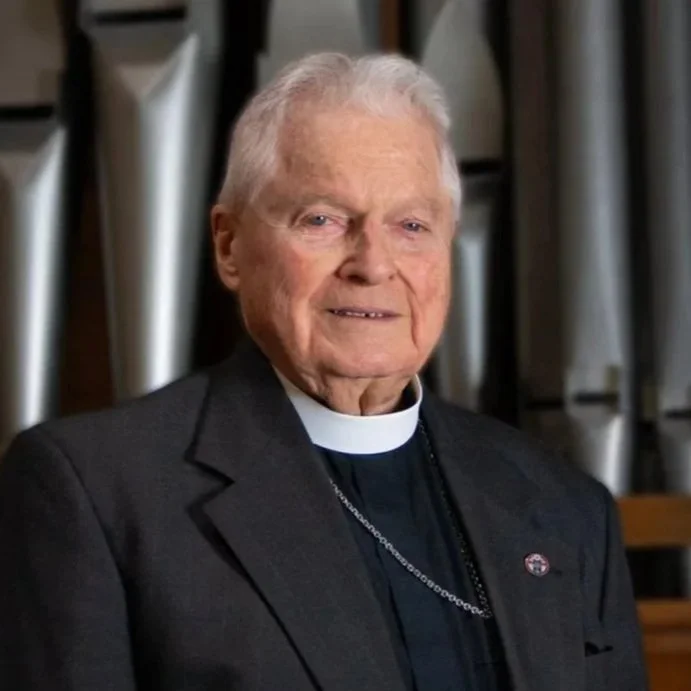
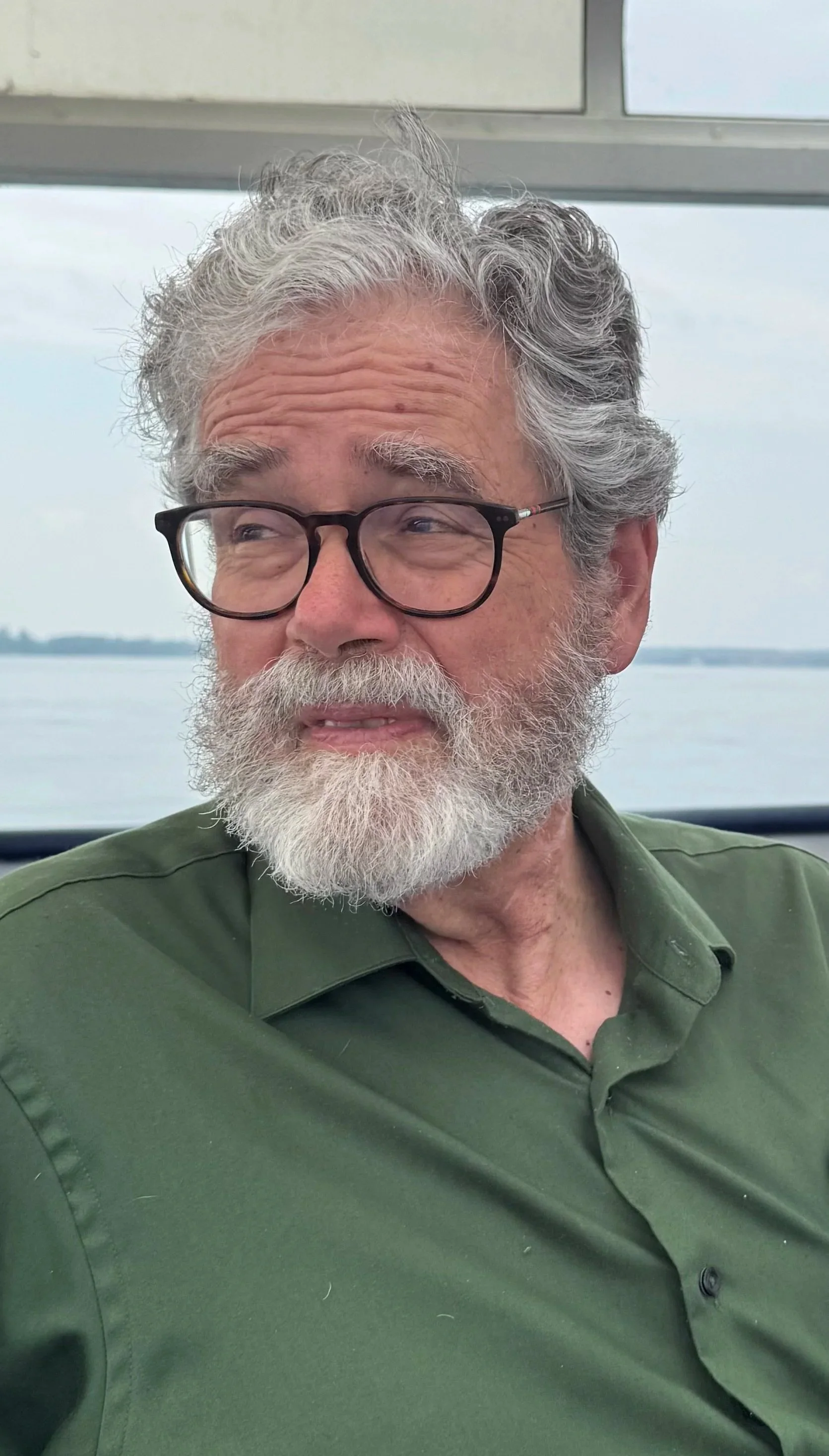
Rev. Dr. Daniel G. Reuning
Lifetime friends, the Rev. Dr. Daniel G. Reuning and the Rev. Joel J. Hensel, chief editor of Te Laudamus, first met while both were attending Concordia Collegiate Institute (Reuning from 1950 to 1955 and Hensel from 1951 to 1954). Their paths crossed again as students at Concordia Seminary in St. Louis (Reuning graduating in 1960 and Hensel in 1959). Their common interest was their passionate appreciation for the Reformation Chorales, especially the hymns of Martin Luther, as well as the music of J. S. Bach.
After seminary Reuning pursued that interest at the School of Sacred Music at Union Theological Seminary where he was awarded the Master of Sacred Music in 1962, majoring in Liturgics and the music of the Reformation era, with an emphasis in organ performance. Later. at the University of Illinois his doctoral studies reinforced and expanded these interests, with an emphasis in choral conducting.
As a pastor Reuning served two Lutheran parishes and for 31 years taught Liturgics and Church Music and was Dean of the Chapel at Concordia Theological Seminary in Fort Wayne. Also in Fort Wayne, during the last 38 years he has served as Kantor of Redeemer Lutheran Church, and in 2002 founded the Bach Collegium Fort Wayne, a community mixed choir accompanied by period instruments, and directed it until his retirement in 2022 . Since then he has been concentrating on finishing Te Laudamus.
After the chief editor, the Rev. Joel Hensel, died in 2018, Reuning was given the task of chairing the forces that would be finishing the Te Laudamus project. Fortunately, he had the most competent assistance of our two associate editors, the Rev. Jesse Krusemark, our music engraver, and Mr. Matthew Carver, our layout designer. He is also indebted to the Rev. Dr. Michael Albrectht, Dr. Carl Springer, and Prof. Bret Heim, artists Anna Horvath and Meghan Schultz, members of the Protes'tant Conference, and twenty-nine volunteer proofers for their very substantive input, encouragement, and support.
8:15p | “The Timeless and Universal Value of Te Laudamus”
Speaker — Dr. Jane Schatkin Hettrick
-
“The Timeless and Universal Value of Te Laudamus”
This talk will start from Luther’s view of hymnody and consider what he might have to say about how hymnody and hymnals progressed after his time. It will consider how the concept of a “good hymn” changed in different historical periods; how the culture influences hymnody and the content of hymnals; the reasons that some hymnals are well received and others rejected; and in today’s American culture, what the standards for both text and music in the selection of hymns for inclusion in hymnals.
In view of the centuries-long complexity of hymnody throughout history, I will explain the critical reason that Te Laudamus is different from all other post-Reformation hymnals, which are products of their times. In Te Laudamus, we have a unique collection of great Lutheran hymns—a hymnal for all times.
Finally, in honor of this momentous occasion, I will introduce a historic hymn designed to celebrate the beginning of this new chapter in hymnal history
-
Dr. Jane Schatkin Hettrick
Jane Schatkin Hettrick, Prof. of Music emeritus, Rider University, is an organist and musicologist working in sacred music. While earning a D.M.A. in organ performance at the University of Michigan, she received a Fulbright Grant to study organ at the Hochschule für Music in Vienna with Anton Heiller, considered the greatest organist of the 20th century. During her time in Vienna, she developed her research interests, looking first for unknown organ music. Going through the entire card-catalogue of the Musiksammlung of the Austrian National Library, she discovered the organ concerto of Antonio Salieri (1750–1825), an unpublished composer’s autograph manuscript. After giving the first modern performance of this Concerto per l’organo, she published her critical edition with the Viennese firm Doblinger Verlag.
Dr. Hettrick continued her study of Salieri, a central figure in Viennese music of the Mozart period, making critical editions of his complete Masses and Requiem Mass, published by A-R Editions, Doblinger Verlag, and in the Denkmäler der Tonkunst in Österreich. Further critical editions include works by Pietro Sales, Anna Bon, Florian Leopold Gassmann, and Franz Schneider. Her research was supported by grants, among them from the National Endowment for the Humanities, an NEH Summer Institute, American Guild of Organists, Austrian Cultural Institute, and Rider University.
Dr. Hettrick has written widely on Catholic and Lutheran sacred music, with over 150 articles and reviews published in American and European journals, including The American Organist, Eighteenth-Century Music, Sacred Music, Gottesdienst, Logia, Clotho, Fontes Artis Musicae, and Studien zur Musikwissenschaft.
Having long served as Organist and Director of Music in the Lutheran Church, she extended her research into historical Lutheran music. Currently, she is exploring the archive of the earliest Lutheran Church in Vienna. The fruits of her archival work include the discovery of an unusual 29-page organist contract and several documents of Andreas Streicher, who contributed to the improvement of music in the Lutheran Stadtkirche in Vienna, compiling the hymnal Melodieenbuch (1824). Altogether, Dr. Hettrick’s work has taken her into many fascinating areas of sacred music, and her volunteer choir has given first presentations of some of her newly edited pieces; but her greatest joy remains leading the congregation singing the powerful historic hymns of the Lutheran Church.
9:15p | Concluding Remarks from the Hensel Family
SATURDAY | JUNE 27, 2027
LOCATION: SANCTUARY
9:00a | Pre-Service Music — Trinity’s organist, Mrs. Trudy Schmaltz
Te Laudamus Office of Matins
Lector/Catechist — Rev. Jesse Krusemark
LOCATION: UNDERCROFT
9:45a | Perspective of Te Laudamus from Its Music Engraver
Speaker — Rev. Jesse Krusemark
-
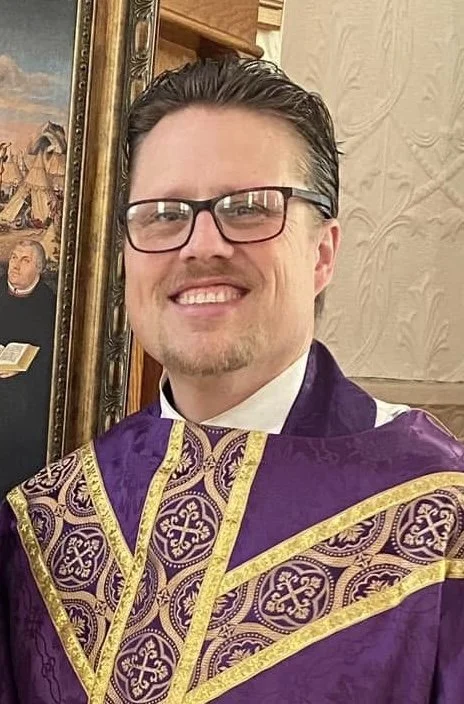
The Rev. Jesse Krusemark
Rev. Jesse Krusemark grew up in Pittsfield, IL. He earned his BA from Luther College in Decorah, Iowa in Music and Physics and pursued graduate work at the University of Illinois, Urbana-Champaign in history of music theory and Renaissance sacred music before preparing for the pastoral ministry at Concordia Theological Seminary in Fort Wayne, Indiana. His entire ministry has been served in the southeastern corner of Minnesota, including his vicarage at Peace Lutheran Church, Faribault where he met his wife, Elizabeth. He is currently sole pastor at Trinity Evangelical Lutheran Church, Waltham where he has served a dozen years. Alongside parish duties, Pastor Krusemark pursues his passion for church music, teaching music at Wittenberg Academy (wittenbergacademy.org) and at homeschool gatherings at Trinity, producing hymn selection guides and compositions for congregational use. He also performs with the Austin (MN) Symphony Orchestra in the second violin section. Pastor Krusemark and Elizabeth have been blessed with four children whom they homeschool.
10:00a | Early Church Hymns in Te Laudamus: Why They Mattered for Luther and Why They Still Matter for Lutherans Today
Speaker — Dr. Carl Springer
-
Early Church Hymns in Te Laudamus: Why They Mattered for Luther and Why They Still Matter for Lutherans Today
In this presentation, I will draw attention to the hymns included in Te Laudamus that antedate the Reformation, most of them originally written and sung in Latin. While Luther was critical of many of the accretions that had attached themselves to Christian worship in the Middle Ages and sought to reform them, he was anything but a revolutionary in this regard. Of course, some of his highly original German chorales blazed new hymnic territory, but he also had a high regard for much of the musical heritage of the Roman church that he inherited. He is rightly considered to be the father of the modern German language, and he prepared the way for the vernacular to be used in modern liturgies, but Luther continued to love the Latin language as well. The editors of Te laudamus have recognized the importance of this hymnic continuity and have included a number of the best known hymns from late antiquity and the Middle Ages, some of them translated by Luther himself. In this presentation, I will offer a lightning quick overview of the history of Christian hymnody before the Reformation and then offer listeners an appreciative analysis of several of these classic compositions and a chance to sing them.
-
Dr. Carl Springer
Dr. Carl P. E. Springer is a distinguished scholar of Classics and the Humanities, currently serving as the SunTrust Chair of Excellence in the Humanities and a professor in the Department of Modern and Classical Languages and Literatures at the University of Tennessee at Chattanooga. A member of the UTC faculty since 2015, he has contributed broadly to the university through both teaching and administrative leadership. His academic formation includes a PhD in Classics from the University of Wisconsin–Madison, a Master’s in Biblical Languages, and a BA from Northwestern College.
Springer’s research centers on one of the most debated intersections in Western intellectual history: the complex and often fraught relationship between the Classics and Christianity. He investigates not only the tensions between these traditions but also the ways in which they inform and enrich one another. His work focuses particularly on their interaction in Late Antiquity and during the Lutheran Reformation, with special attention to textual criticism, religious poetics, Latin prose style, and the history of Lutheran classical education and worship.
Widely recognized for his scholarship on the early medieval Latin poet and hymnographer Sedulius, Springer is currently editing Sedulius’s collected works. He has also written extensively on Martin Luther’s engagement with classical authors such as Virgil and Aesop, as well as on Luther’s own Neo-Latin poetry. His research further extends to J. P. Koehler, an early twentieth-century Lutheran theologian steeped in classical learning. Throughout his career, Springer has demonstrated a deep commitment to illuminating the rich dialogues between classical literature, Christian thought, and their enduring influence on Western culture.
11:00a | BREAK
11:l5a | Luther’s Early Hymns in Context
Speaker — Dr. Robert J. Christman (in absentia)
-
Martin Luther’s Early Hymns in Their Historical Context
At the very beginning of his musical career, for a brief moment in 1524, Martin Luther composed songs that responded directly and in deeply personal ways to his own historical and spiritual circumstances. Not necessarily intended for use in the church service, these few compositions have been referred to by scholars as Zeitunglieder (news events songs) and Zeitspsalmen (contemporary psalms). Shortly thereafter, Luther would largely abandon this type of song, turning his attention rather to congregational singing in the context of the church service. This presentation will recount the early development of Luther’s hymn writing with an eye toward understanding his Zeitunglieder and Zeitspsalmen in their historical and spiritual context and by doing so, comprehending more deeply their explosive impact.
-
Dr. Robert J. Christman
Robert J. Christman holds the Martin and Mary Hull Mohr Professorship in Renaissance and Reformation Studies at Luther College in Decorah, Iowa. He earned his Bachelor’s degree from Boston University and his Master’s Degree and Ph.D. in Late Medieval and Early Modern European History from the University of Arizona. He has published broadly on topics related to the Protestant Reformation in the German-speaking lands. His most recent book The Dynamics of the Early Reformation in their Reformed Augustinian Context, Amsterdam: Amsterdam University Press, 2020, recounts history and impact of the Reformation’s first executions, the martyrdom of the Augustinian friars Henry and John in Brussels on July 1, 1523. He is currently working on new project that examines the integration of individuals from outside the Judeo-Christian, European context into the Early Modern German-speaking lands.
11:45a | Panel Discussion of the Art in Te Laudamus
Moderator — Dr. Avery Springer
Panelist — Mrs. Meghan Schultz (in absentia)
Panelist — Rev. Adam Carnehl (in absentia)
Panelist — Rev. Paul Hinz
12:30p | LUNCH
2:00p | The Design of Te Laudamus: From Layout to a Bound Hymnal
Speaker — Mr. Matthew Carver
-
Mr. Matthew Carver
Matthew Carver, from Long Beach, CA, has undergraduate degrees in Classics and German from CSU Long Beach and an MFA in Painting & Drawing from San Francisco Art Institute. He is a freelance translator of German and Latin theological and devotional writing and poetry and a freelance graphic designer on the side. Notable translations and publications of his include Walther’s Hymnal, The Great Works of God, Liber Hymnorum: The Latin Hymns of the Lutheran Church, The Joy of Eternal Life (by Philip Nicolai), The Lutheran Prayer Companion, and the Latin-language hymnal, Cantionale Lutheranum. He and his wife Amanda (of Nashville, TN), also a graphic designer and founder and owner of needlecraft kit company Hoops & Dreams, have two sons and reside in Nashville, TN.
2:l5p | The Te Laudamus Psalter and Its Use in the Church Today
Speaker — Rev. Dr. Benjamin Mayes
-
The Te Laudamus Psalter and Its Use in the Church Today
The Psalter of Te Laudamus brings the German Lutheran tradition of Gregorian chant to a wider public. German Lutheran Gregorian chant was a continuation of the church’s traditional music in the Lutheran Churches of the Reformation. After a hiatus of chant in the “long 18th century,” German Lutherans began to recover this tradition in the 19th century. In the Synodical Conference it was continued by Friedrich Lochner, but was developed to a high degree by German Lutherans in the 20th century. Te Laudamus brings the simplest form of this chant to its users. Following the consistent musical principles established with The Brotherhood Prayer Book, Te Laudamus makes the entire Psalter available to every user. Benjamin T. G. Mayes will discuss the history of this style of singing Psalms within the Lutheran Church and suggested ways to use these Psalms in corporate and private worship.
-
Rev. Dr. Benjamin Mayes
Benjamin T. G. Mayes joined the CTSFW faculty in 2016 where he serves as Associate Professor and the Chairman of Historical Theology. He studied at Concordia University Nebraska, Lutherische Theologische Hochschule (Oberursel, Germany), and CTSFW. His PhD is from Calvin Theological Seminary, Grand Rapids, MI, on classic Lutheran casuistry, divorce, and remarriage.
Mayes previously served as associate pastor of Our Savior Lutheran Church, Grand Rapids, MI; and editor at Concordia Publishing House. He is co-general editor for CPH’s new volumes of Luther’s Works: American Edition. His forthcoming book is Divorce and Remarriage: Ecclesiastical Discernment and Pastoral Care (CPH, 2026).
3:l5p | BREAK
3:30p | Martin Franzmann – Another Second Martin
Speaker — Rev. Dr. Michael Albrecht
-
Martin Franzmann – Another Second Martin
Martin Luther gave us his Smalcald Articles and his catechisms together with his German Bible and his hymns. Martin Chemnitz is known as the Second Martin for his work on the Formula of Concord and his magnum opus, The Examination of the Council of Trent. Chemnitz is a dogmatician. But when you Google “Hymns by Martin Chemnitz,” the response is “Thinking.” Martin Franzmann is “Another Second Martin” because he is an exegete who has also given us many excellent hymns and hymn translations. Franzmann’s books and his numerous journal articles and his hymns harmonize well with the Wauwatosa Theology, which flourished while Franzmann was a student at Northwestern College and Wisconsin Lutheran Seminary. Between the covers of Te Laudamus, the hymns of Martin Luther and the hymns of Martin Franzmann sit next to each other quite comfortably
-
Rev. Dr. Michael Albrecht
Pastor Michael J. Albrecht was born in 1955 in Saint Paul, Minnesota. His family has deep Lutheran roots—his father, his uncle, his grandfather, and his great-grandfather all served as Lutheran pastors. He graduated from Wisconsin Lutheran Seminary in 1982 and then spent a year teaching German and American history before being called to launch a new mission congregation in Houston, Texas. During his years there, he met and married his wife, Donna, and together they raised five children.
Pastor Albrecht served as one of three pastors at Saint James Lutheran Church in West Saint Paul, Minnesota (1990–2020). After his father’s death, Pastor Albrecht completed his father’s manuscript for the Matthew volume of The People’s Bible commentary series in 2000.
He became involved in international mission work which included twenty trips to India to collaborate with the Bible Faith Lutheran Church. He also visited Lutheran churches in the Czech Republic and Russia. He spent a sabbatical in Germany to study Reformation history and the writings of Martin Luther. He earned a PhD in church history at Luther Seminary and wrote his dissertation on “The Faith-Life Legacy of a Wauwatosa Theologian: Prof. Joh. Ph. Koehler, Exegete, Historian, and Musician” (2008).
Pastor Albrecht has also served as one of the editors of Logia: A Journal of Lutheran Theology. The journal calls itself “a free conference in print” and strives to promote confessional Lutheran scholarship and faithful pastoral care. In addition to writing for Logia, he has also written for Faith-Life and other periodicals.
LOCATION: SANCTUARY
4:45p | Pre-Service Music — Trinity’s organist, Trudy Schmaltz
Willan Setting of the Divine Liturgy (observed like TLH p. 5 without Communion)
Officiant — Rev. Jesse Krusemark
Lector — Mr. David Schotte
Concluding Remarks — Rev. Dr. Daniel Reuning
LOCATION: UNDERCROFT
5:45p | Farewell Gemütlichkeit Reception
❦
Available Now
Published by
The Protes’tant Conference
❦
Hardcover | leatherette
Smyth-sewn binding
765 pages
Color illustrations
ISBN: 978-1-934328-06-4